Why Proper Drywall Taping Makes or Breaks Your Walls
Most people never think about what goes into a smooth wall. They just want it to look good when it's done. But here's the thing - what happens before the paint ever hits the surface is what determines whether you get walls that look professional or walls that show every flaw the moment light hits them at an angle.
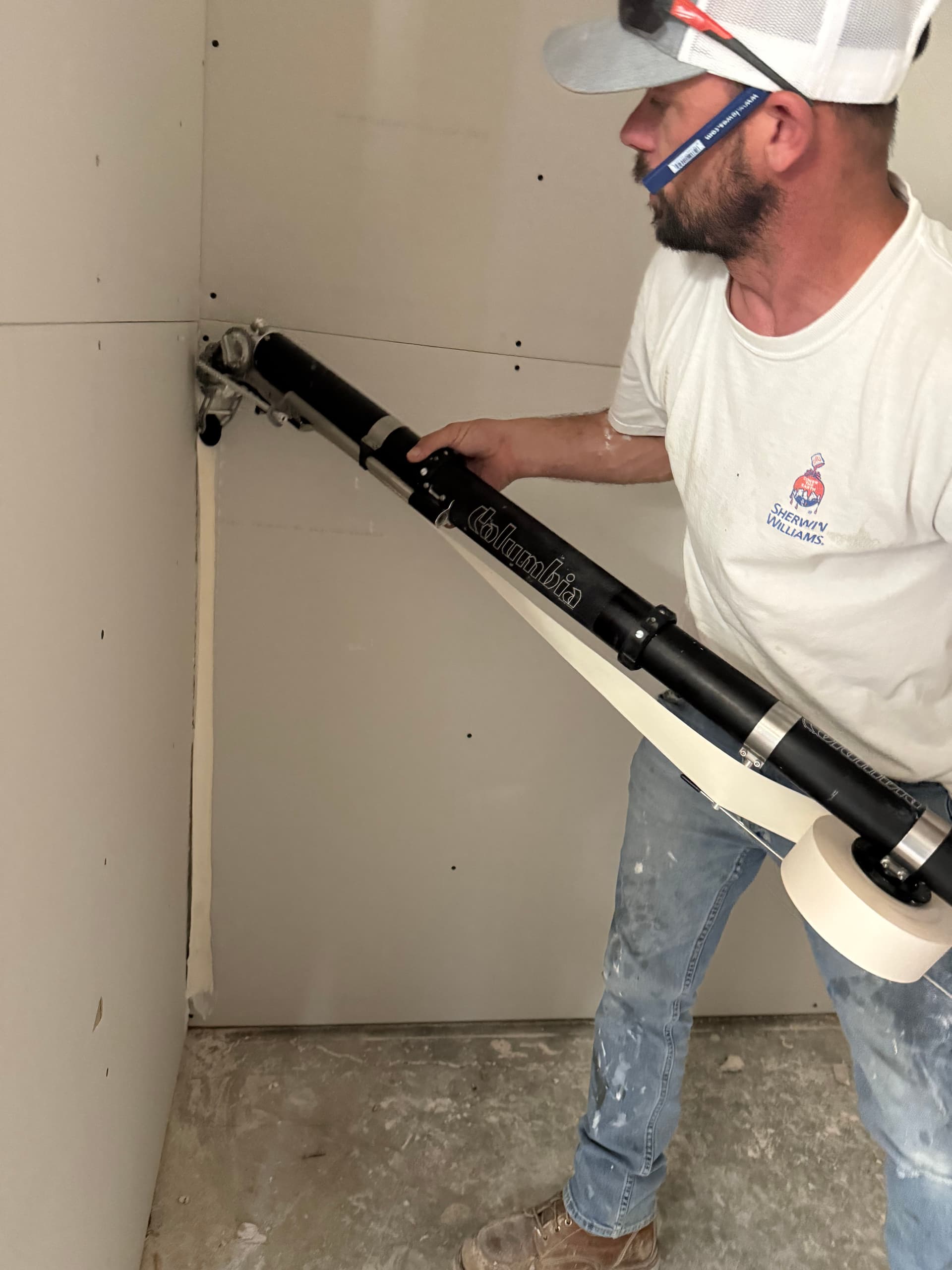
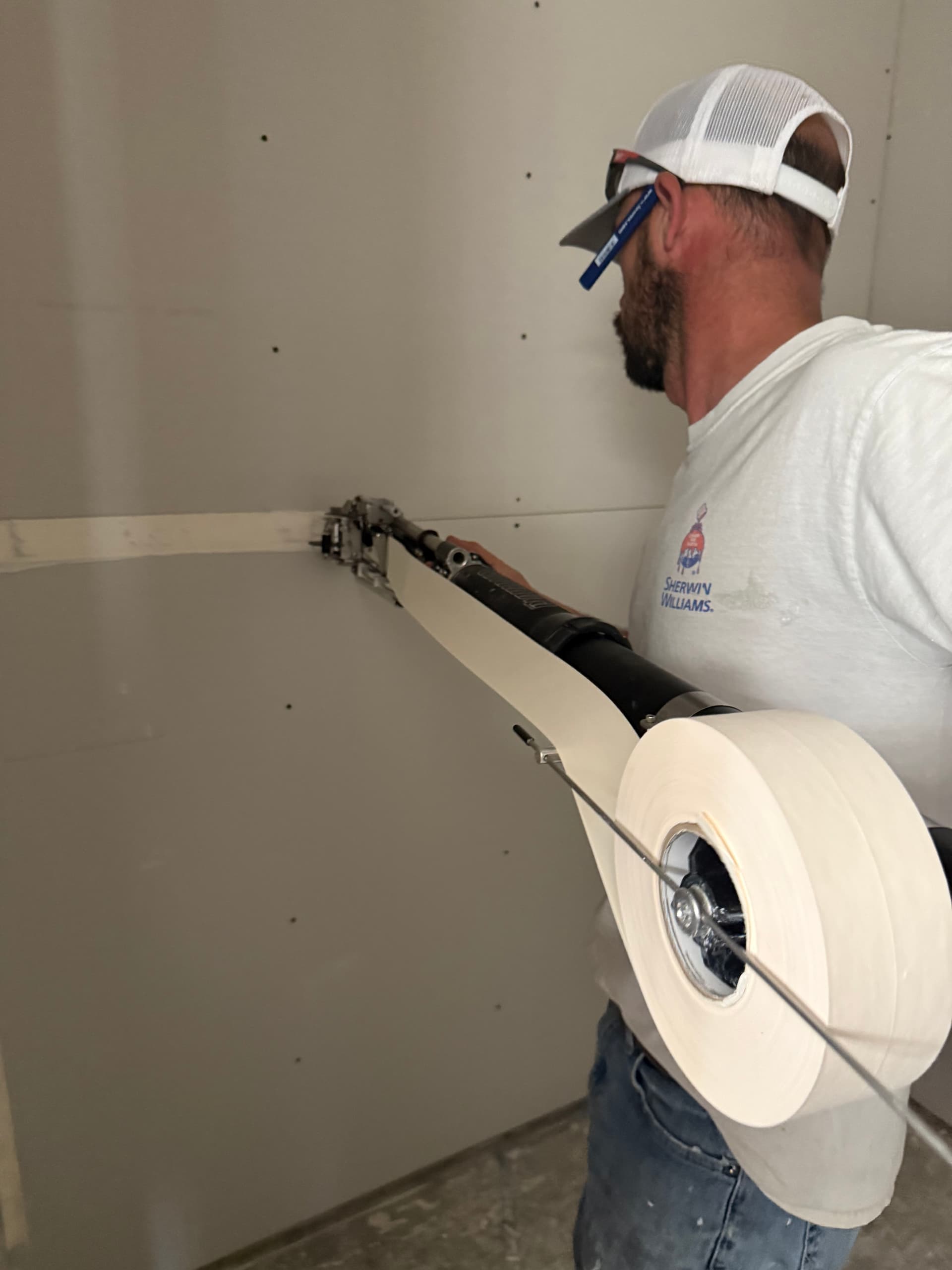
Taping sheetrock seams is one of those steps that's easy to rush and hard to fix later. We use a Columbia taping tool to lay tape along the seams with consistent pressure and even mud coverage. No guesswork, no shortcuts. The tool helps us keep the tape flat and the compound smooth across every linear foot of seam - corners, flat joints, ceiling lines, all of it.
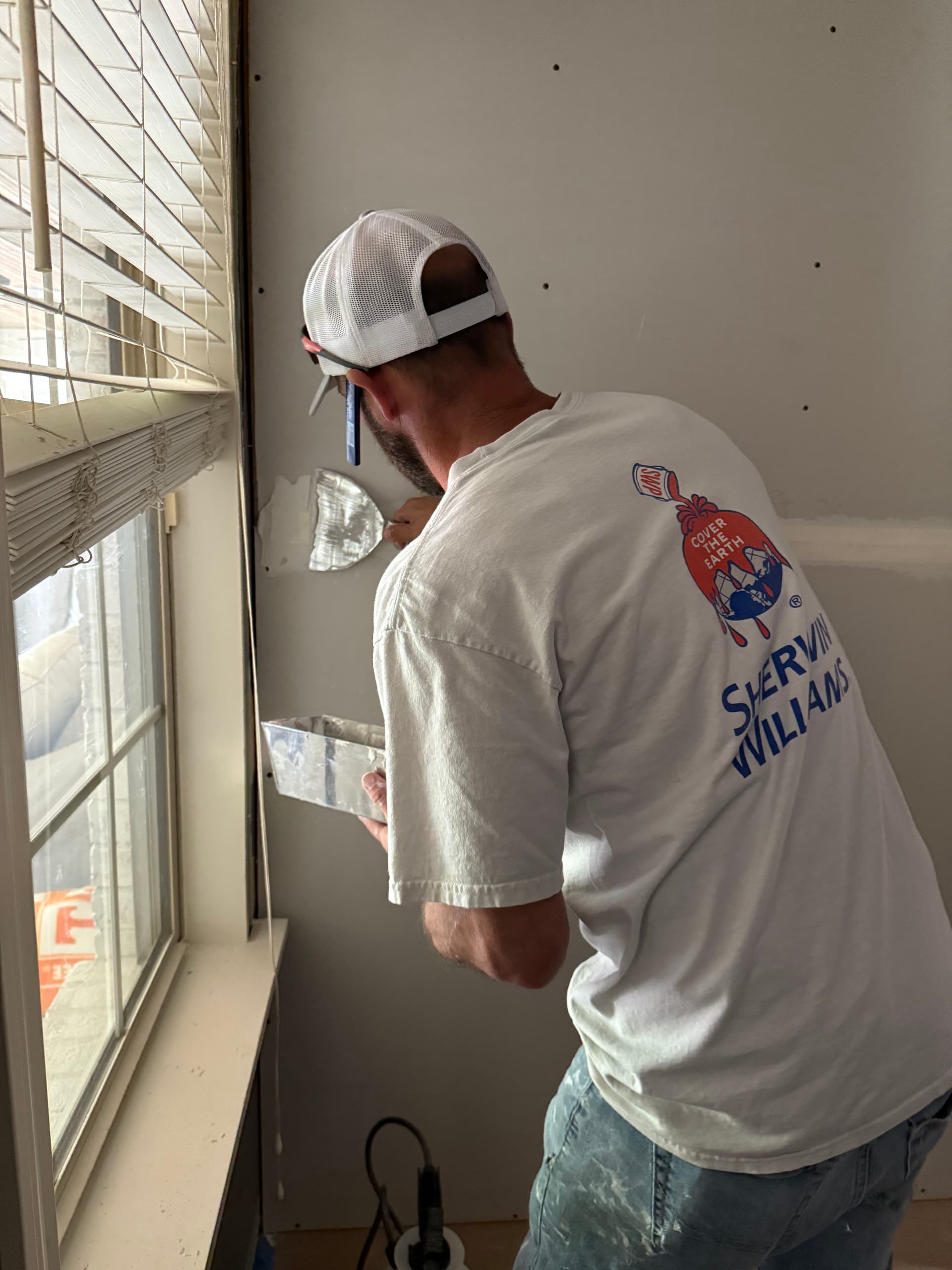
The hand work matters just as much. Along window edges and anywhere the taper can't reach, we switch to a mud pan and a finishing knife to detail out those spots by hand. That's where a lot of crews cut corners. We don't. Every transition gets the same attention whether it's a wide open flat wall or a tight spot near trim.
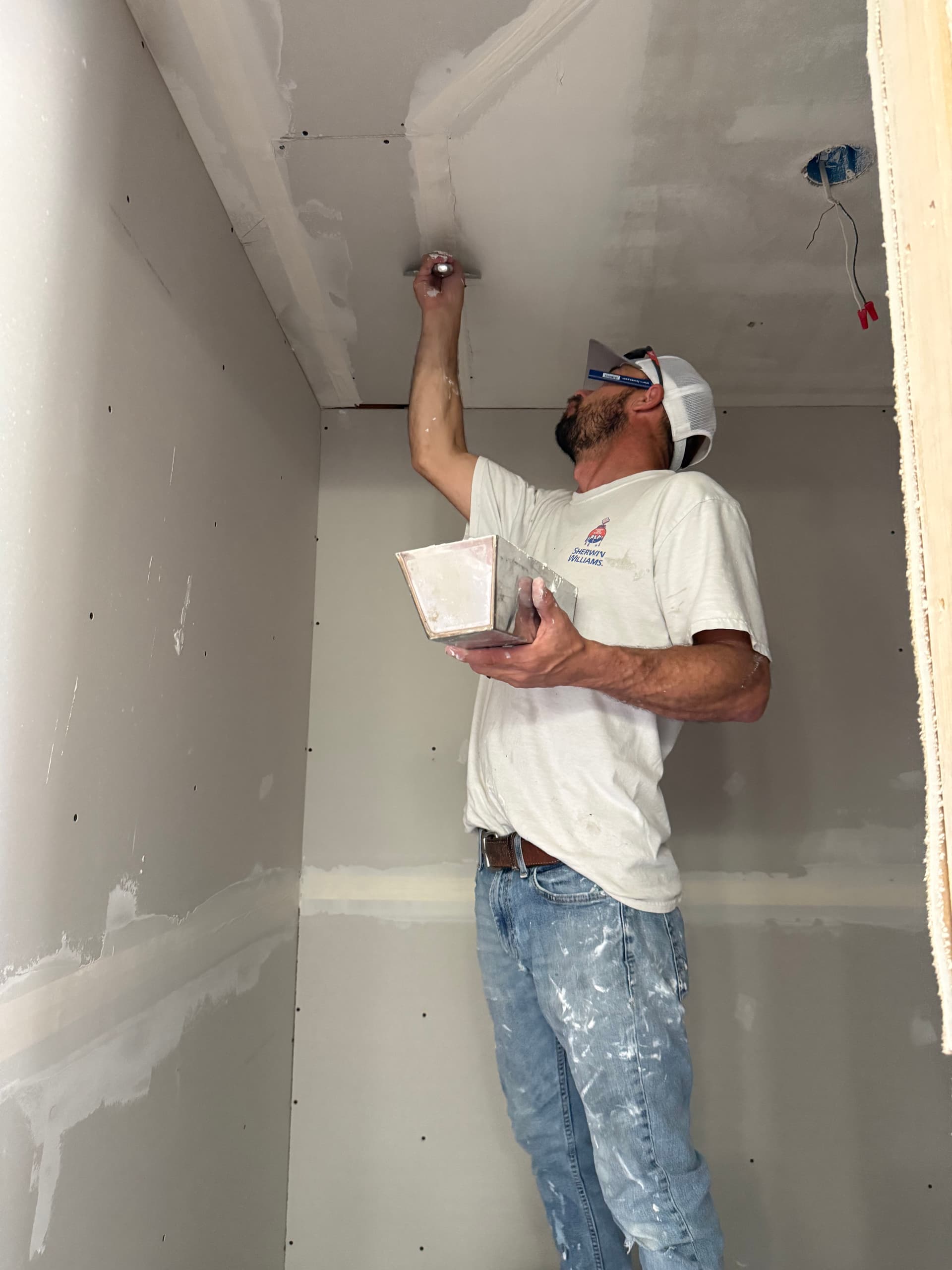
The ceiling-to-wall joint is one of the hardest areas to get right. That's where most drywall jobs start showing cracks or unevenness down the road. We take extra care working that seam so the finished line is clean and tight - the kind of thing that holds up long after the job is done.
Clean walls start with work like this. It's not glamorous, but it's the foundation of every great paint job and every smooth finished interior. We take pride in doing it right the first time.